
How to Unclog a Drain Without Harsh Chemicals
Key takeaways
- You can unclog most household drains naturally with a plunger, a drain snake, and baking soda followed by hot water, no caustic chemicals needed.
- Caustic drain cleaners can harm older pipes and seals; mechanical and natural methods are gentler on the plumbing common in Zurich flats.
- Fat, oil and grease are a leading cause of blockages: Thames Water logged 14,810 fat-related blockages year to date in its 2025 update.
- Prevention beats repair. Strainers, hot water flushes, and never pouring grease down the sink stop most clogs before they start.
- If water backs up across several drains at once, stop the DIY and call a professional before a blockage turns into a flood.
Reach for a plunger and a cup of baking soda before you reach for a bottle of caustic cleaner. Most slow or blocked household drains clear with simple mechanical tools and a hot water flush, and you can unclog a drain naturally without pouring corrosive chemicals into your pipes or the Zurich sewer system.
Harsh drain cleaners promise an easy fix, but they often fail on solid blockages, sit in the pipe as a hazard, and wear down the seals and metalwork common in older Swiss apartments. The good news: the methods a professional reaches for first are mostly gentle, cheap, and already in your cupboard. This guide walks through why drains block, the tools that actually work, natural methods for each fixture, and the warning signs that mean it is time to stop and call for help.
Why Do Drains Block in the First Place?
Drains block because the wrong things go down them, slowly narrowing the pipe until water can no longer pass. In the kitchen, the usual culprit is fat, oil and grease that cools and hardens on the pipe wall. In the bathroom, it is hair bound together with soap scum.
Fat, oil and grease are a genuinely large-scale problem, not just a household nuisance. In its October 2025 update on a 100-tonne fatberg, Thames Water reported 14,810 fat, oil and grease blockages year to date across its network, alongside 28,899 blockages caused by rags and wipes (Thames Water, 2025). Those figures come from a UK utility, but the physics are identical in Zurich: grease that goes down warm turns solid once it cools inside the pipe.
Common causes of a blocked drain include:
- Cooking fat, oil, and grease poured down the kitchen sink
- Hair and soap scum in bathroom sinks, showers, and baths
- Food scraps, coffee grounds, and rice that swell in water
- Wet wipes, cotton buds, and sanitary items in the toilet
- Mineral scale build-up, which matters in hard-water parts of Switzerland
- Small objects dropped down an unguarded plughole
Once you know what causes a clog, prevention and clearing both get much simpler. The next sections cover both.
How Can You Prevent Blocked Drains?
Prevention is far cheaper than repair, and a few small habits stop most clogs before they form. The single biggest win is keeping fat, oil and grease out of the sink entirely, since grease is the hardest blockage to clear once it sets.
Blockages scale into real money and real damage when they are ignored. Discover Water, which publishes data for the UK water industry, recorded 4,808 properties internally flooded by sewage between April 2024 and March 2025, plus 50,281 incidents of gardens and private land flooded (Discover Water, 2025). A blocked drain that backs up is not only unpleasant; it can flood a home.
Build these habits into your routine:
- Pour cooled cooking fat into a jar or the food waste, never down the sink
- Fit a mesh strainer over every plughole to catch hair and scraps
- Run hot tap water for 30 seconds after washing greasy dishes
- Clear the strainer and plughole once a week, before gunk builds up
- Flush only the three Ps down the toilet: pee, paper, and poo
- Once a month, send a kettle of hot (not boiling) water down the kitchen drain
If you manage several flats, a shared checklist keeps tenants on the same page. Our property maintenance Zurich checklist covers drains alongside the other seasonal jobs that protect a building.
What Tools Do You Need to Unclog a Drain?
A small, cheap kit clears the vast majority of household blockages, and none of it involves chemicals. You do not need a van full of equipment; five or six items cover every common clog in a flat or house.
The core drain-clearing kit:
- A cup plunger for sinks, baths, and showers
- A flange plunger kept separate for the toilet
- A hand-cranked drain snake, around three to five metres long
- A box of baking soda and a bottle of white vinegar
- A bucket, rubber gloves, and old towels for trap removal
- A mesh strainer for every plughole, as prevention
Keep two things in mind when buying. First, match the plunger to the job: the flat cup seals a sink, while the folding flange seals a toilet outlet. Second, a hand auger is plenty for home use, and it will not crack brittle old pipes the way a powered machine can. Store the kit under the sink so a slow drain never becomes an excuse to buy a bottle of caustic cleaner.
It helps to know which jobs this kit handles and which it does not. A plunger and snake clear soft blockages and trapped objects within a metre or two of the plughole. They will not reach a fault deep in the shared stack, which is where a professional takes over. The sections below walk through each tool, then each fixture, in that order.
How Do You Use a Plunger Effectively?
A plunger clears a blockage with pressure, pushing and pulling water against the clog until it breaks loose. It is the first tool a professional reaches for because it works on most soft blockages in a sink, bath, or toilet, and it uses no chemicals at all.
The trick most people miss is the seal. A plunger only works if it is fully submerged and pressed flat, so the force travels through water, not air. Here is the method:
- Remove any strainer or plug, and clear visible debris from the plughole.
- If the sink has an overflow hole, block it with a damp cloth so the pressure cannot escape.
- Run enough water to cover the rubber cup of the plunger.
- Place the cup squarely over the drain and press down gently to push out trapped air.
- Pump firmly up and down 15 to 20 times, keeping the seal intact.
- Pull the plunger away sharply on the last stroke and watch the water drain.
- Repeat two or three times if the water is still slow.
Use a cup plunger (the flat, red kind) for sinks and baths. Use a flange plunger (the one with an extra rubber lip that folds out) for toilets, since the flange seals the curved toilet outlet. Keep a separate plunger for the toilet for hygiene reasons.
When Should You Use a Drain Snake?
Reach for a drain snake when a plunger has not shifted the blockage, because a snake physically reaches the clog instead of relying on pressure. A drain snake, also called a plumber's auger, is a long flexible cable you feed into the pipe to hook or break up whatever is stuck.
Hair blockages in bathroom drains respond especially well to a snake, since the barbed tip grabs the tangle and lets you pull it straight out. For a sink, you often get the best result by removing the U-bend (the curved trap under the sink) first, then snaking the pipe beyond it.
To use a drain snake:
- Place a bucket under the trap to catch water and debris.
- Feed the cable slowly into the drain until you feel resistance.
- Turn the handle clockwise to drive the tip into the blockage.
- Push and pull gently to break the clog apart or hook it.
- Withdraw the cable slowly, pulling out any debris with it.
- Flush the drain with hot water to clear the loosened material.
A hand-cranked drain snake is an affordable, cupboard-sized tool, and it belongs alongside the other basics every homeowner should keep to hand. Avoid forcing a powered auger in an old building, since too much force can crack brittle pipework.
Do Baking Soda and Hot Water Really Work?
Baking soda and hot water work well on light grease and soap build-up, though they will not clear a solid blockage or a wedged object. The method is gentle, cheap, and safe for the drains in most Zurich flats, which makes it a sensible first try for a slow drain rather than a fully blocked one.
The science is straightforward. Baking soda is mildly alkaline and lifts grease, while a hot water flush melts soft fat and carries the loosened gunk away. Adding vinegar creates the familiar fizz, which helps agitate the residue near the plughole. The reaction is far too mild to harm pipes, unlike caustic cleaners that generate real heat.
The natural drain refresh, step by step:
- Remove standing water from the sink or basin so the mixture reaches the pipe.
- Pour about half a cup of baking soda directly into the drain.
- Follow with half a cup of white vinegar and cover the plughole with a plug.
- Wait 10 to 15 minutes while the mixture works.
- Flush with a kettle of hot water (hot tap water for plastic pipes, boiling is fine for metal).
Repeat the flush monthly as maintenance, not just as a cure. One caution: do not combine this method with a shop-bought chemical cleaner in the same drain, because mixing products can release dangerous gases.
How Do You Clear a Blocked Kitchen Sink?
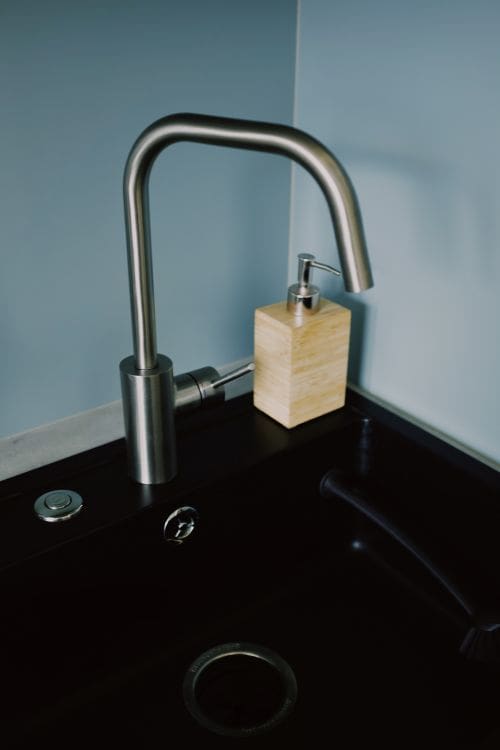
A blocked kitchen sink almost always comes down to grease and food, so start by attacking the fat with hot water and baking soda, then move to a plunger. Grease is the most common kitchen clog because it pours in as a liquid and sets as a solid once it cools inside the pipe.
Work through it in order:
- Boil a kettle and pour hot water down the drain to soften the grease.
- Try the baking soda and vinegar method, then flush again with hot water.
- If the water is still slow, block the overflow and plunge with a cup plunger.
- Still blocked? Place a bucket under the U-bend, unscrew it, and clear it by hand.
- Snake the pipe beyond the trap if the blockage sits further along.
The U-bend traps most kitchen clogs, so cleaning it out solves a surprising number of cases. Wear gloves, keep the bucket in place, and check the seals when you refit the trap. If a tap near the sink is also dripping, deal with it while you are under there; our guide on how to fix a dripping faucet at home covers that repair.
How Do You Unclog a Shower or Bath Drain?
Shower and bath blockages are nearly always hair bound with soap scum, so a drain snake or even a bent wire usually does the job. These drains clog slowly, so you often notice water pooling around your feet long before it stops draining entirely.
The approach:
- Lift out or unscrew the drain cover.
- Use a hooked tool, a drain snake, or a plastic hair-catcher strip to pull out the hair clump.
- Follow with baking soda and a hot water flush to clear the greasy soap residue.
- Plunge with a cup plunger if the flow is still slow, sealing any overflow first.
Prevention here is almost too easy. A small mesh hair catcher over the plughole stops the next blockage from forming, and clearing it takes seconds in the shower. For families, this one habit prevents most shower clogs for good.
How Do You Deal With a Blocked Toilet Safely?
A blocked toilet clears best with a flange plunger and patience, never with chemical cleaner, which can splash and sit in the bowl as a hazard. Most toilet blockages are soft, caused by too much paper or wipes, and a good plunging seal shifts them.
Handle it carefully:
- If the bowl is near overflowing, wait. Do not flush again, as the level will drop.
- Put on gloves and insert a flange plunger, unfolding the rubber lip into the outlet.
- Plunge firmly 15 to 20 times, keeping the plunger submerged.
- If that fails, use a toilet auger (a snake with a protective sleeve) to reach the trap.
- Test with a single flush once the water starts to move freely.
Never pour boiling water into a porcelain toilet, since the sudden heat can crack the bowl. Wet wipes are a frequent offender. In its 2025 update, Thames Water reported removing around 3.8 billion wet wipes from its sewers each year at a cost of roughly 18 million pounds. Even wipes labelled flushable belong in the bin, not the pan.
Why Avoid Harsh Chemical Drain Cleaners?
Harsh chemical drain cleaners are worth avoiding because they damage pipes, create a safety hazard, and often fail to clear the actual blockage. Caustic cleaners rely on a strong chemical reaction that generates heat, and that heat and corrosiveness take a toll on your plumbing.
The practical problems with caustic cleaners:
- They can corrode older metal pipes and degrade rubber seals and gaskets.
- On a solid blockage, the chemical simply pools on top, leaving a dangerous liquid in the pipe.
- Mixing two products, or adding one after vinegar, can release toxic fumes.
- They are harsh on the environment and on the wastewater system.
- A failed chemical treatment leaves a plumber working around a pipe full of caustic liquid.
Mechanical and natural methods avoid every one of these problems. They target the blockage directly, they cost next to nothing, and they are safe for the mixed-age plumbing found across Zurich buildings. That is why a plunger, a snake, and a box of baking soda outperform a bottle of cleaner for almost every common clog.
How Do You Clear a Blocked Outdoor or Gully Drain?
Outdoor gully drains, the small grated drains outside a kitchen or by a downpipe, block with leaves, silt, and grease washed out from the sink. Clearing one is messier than an indoor job but just as chemical-free, and it stops dirty water pooling against the wall of the building.
Work through it like this:
- Lift the grate and scoop out leaves, silt, and debris by hand into a bucket.
- Use a trowel or gloved hand to clear the trap beneath the grate.
- Feed a drain snake into the outlet pipe if water still will not drain.
- Rinse the gully with a hose or a bucket of hot water once it clears.
- Refit the grate and check that surface water now flows away freely.
Autumn is the peak season for outdoor blockages, as falling leaves clog gullies and gutters together. Keeping gutters clear reduces the load on ground drains, so a quick gully check pairs naturally with your seasonal gutter clean. A gully that overflows in heavy rain, or stays blocked after you clear the visible debris, usually points to a deeper pipe problem worth a professional look.
Does Hard Water Make Zurich Drains Harder to Clear?
Hard water does contribute to drain and pipe problems in much of Switzerland, because dissolved calcium and magnesium leave scale that narrows pipes over time. Scale rarely blocks a drain on its own, but it gives soap scum, grease, and hair something to cling to, so clogs form faster.
You will notice the effect first on fittings: white, chalky deposits around taps, plugholes, and shower heads. Inside the pipe, the same scale slowly reduces the diameter. A monthly baking soda and hot water flush helps keep the greasy film down, which matters more in hard-water areas because there is more for that film to stick to.
For the scale you can see:
- Wipe plugholes and tap fittings with a vinegar-soaked cloth to dissolve light deposits.
- Soak a removable shower head in diluted white vinegar for an hour, then rinse.
- Flush drains monthly with hot water to slow the build-up inside the pipe.
Heavier internal scaling in old pipework is a job for a professional, who can assess whether the pipe needs descaling or replacement rather than another flush. If limescale is a constant battle in your building, it is worth raising with whoever handles the plumbing maintenance.
When Does a Blocked Drain Need a Professional?
Call a professional when a blockage affects several drains at once, keeps coming back, or shows signs of a sewage problem, because those point to a fault in the main line rather than a single fixture. Trying to force these yourself risks turning a slow drain into a flood or a cracked pipe.
Stop the DIY and get help if you notice:
- Water backing up in more than one drain at the same time
- The toilet level rising when you run a sink or use the washing machine
- A persistent sewage smell from the drains
- Gurgling sounds across multiple fixtures
- A blockage that returns within days of being cleared
- Water or damp appearing near drains, walls, or floors
These symptoms suggest the blockage sits deep in the shared or main line, where a professional has the cameras and powered augers to find and clear it safely. A tradesperson who knows local Swiss building standards can also spot whether an old pipe needs repair rather than just clearing. If you are weighing up who to call, our guide on how to choose a reliable handyman you can trust is a useful starting point.
Your Next Step for a Clear, Healthy Drain
Keep a cup plunger, a hand drain snake, and a box of baking soda within easy reach, and fit a mesh strainer over every plughole this week. That small kit handles the large majority of household clogs and spares your pipes the damage that caustic cleaners cause. Start with the gentle methods in this guide, in order, and only escalate when the warning signs tell you to.
If a drain in your Zurich home or business keeps backing up, or you would rather not take apart the U-bend yourself, Homeexpert2u can clear it quickly and check the pipework while we are there. Get in touch and we will sort it out properly, the first time.
Frequently asked questions
Does baking soda and vinegar really unclog a drain?
For light grease and soap build-up, yes. The fizzing reaction loosens soft gunk, and a hot water flush carries it away. It will not shift a solid blockage or a wedged object, which needs a plunger or drain snake.
Is it safe to pour boiling water down the drain?
Use very hot tap water for PVC and plastic pipes, since boiling water can soften or deform them. Boiling water is fine for metal pipes. When unsure, hot tap water is the safe default for any drain.
Why should I avoid chemical drain cleaners?
Caustic cleaners generate heat and can corrode older metal pipes, damage rubber seals, and harm the environment. They also sit on top of a solid blockage without clearing it, leaving dangerous liquid in the pipe.
When should I call a plumber for a blocked drain?
Call a professional if several drains back up at once, water rises in the toilet when you run a tap, you smell sewage, or the blockage keeps returning. These signs point to a deeper problem in the main line.