
How to Hang Shelves on Concrete and Brick Walls
Key takeaways
- A hammer drill with a carbide-tipped masonry bit is essential for concrete; a standard drill will stall or overheat.
- Match the wall plug to both the wall material and the load: light plastic plugs for pictures, sleeve or wedge anchors for heavy shelves.
- Cables usually run in vertical and horizontal zones near sockets and switches, so scan the wall and avoid drilling directly above or below fittings.
- A 4:1 safety factor is standard practice, so plan for the shelf and its contents to weigh well under an anchor's rated load.
- Most shelf failures come from the wrong plug, an oversized hole, or skipping the level, not from a weak wall.
To hang shelves on a concrete wall you need a hammer drill, a carbide-tipped masonry bit, and wall plugs rated for both the wall and the weight you plan to load. Get those three things right, mark your holes level, and check for hidden cables first, and the shelf will hold for years. Most failures trace back to a wrong plug or a rushed hole, not a weak wall.
Concrete and brick are far less forgiving than plasterboard. There is no give, no stud to find, and no second chance once you have drilled an oversized hole in the wrong spot. This guide walks through every step, from picking the bit to understanding why some shelves pull straight out of the wall.
Choosing the Right Drill Bit and Wall Plugs for Concrete
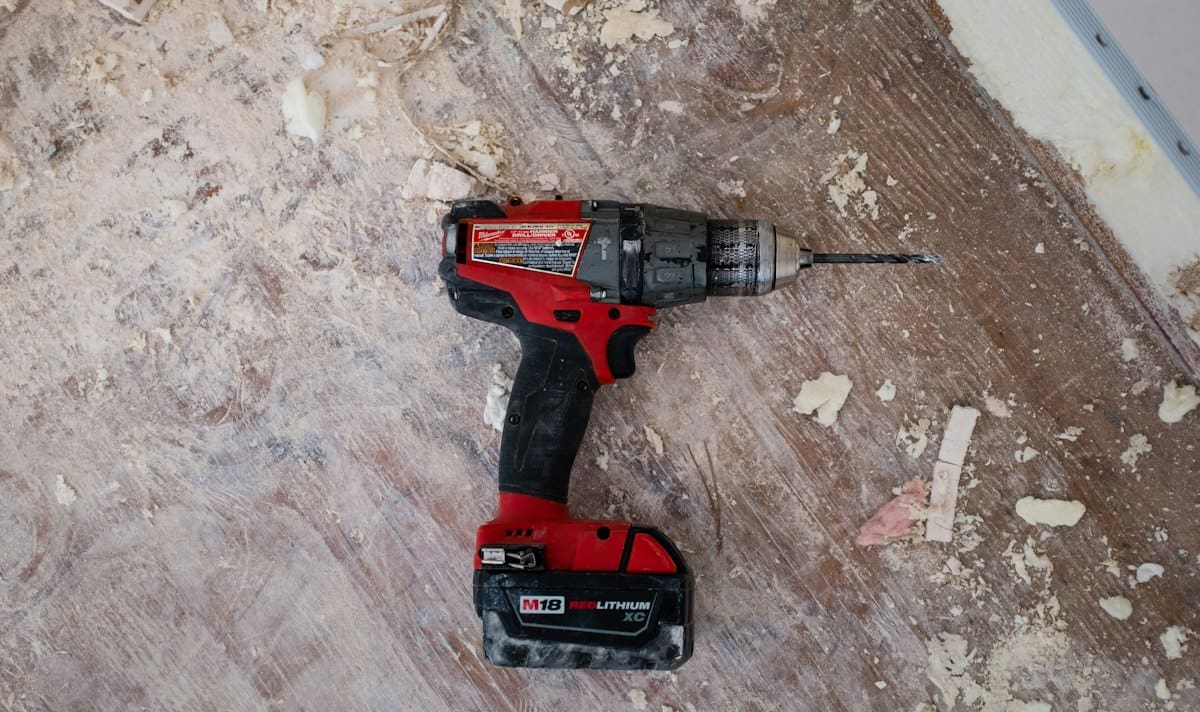
For concrete, use a hammer drill paired with a carbide-tipped masonry bit. A standard rotary drill relies on cutting, which concrete resists, so it will overheat, wander, and leave you with a shallow, glazed hole. Masonry bits work by pulverising the material while the hammer action pounds the tip forward, which is the only efficient way through dense masonry.
Pick the drill to match the wall:
- Standard rotary drill: fine for soft brick and mortar joints only.
- Hammer drill (percussion): the baseline tool for concrete and dense brick.
- SDS-plus hammer drill: professional-grade, much faster through hard concrete, and easier on your wrists.
The wall plug matters just as much as the bit. A plug converts a smooth hole into a grip by expanding against the masonry as the screw bites. Common options, from light to heavy duty:
- Plastic expansion plugs: pictures, mirrors, and small shelves.
- Nylon frame fixings: medium loads and hollow brick, where the plug knots behind the face.
- Sleeve anchors: heavier shelves in solid concrete.
- Wedge anchors: the heaviest brackets and near-structural loads.
Match the plug colour or size to the screw and the stated load on the packet. A plug that is one size too small is the most common reason a fixing never grips properly.
Finding and Avoiding Hidden Cables and Pipes
Before any drill touches the wall, find out what is behind it. Electrical cables buried in walls are a genuine hazard, and striking a live one is one of the more serious risks a home DIYer faces. The UK Health and Safety Executive records roughly a thousand electrical accidents at work reported each year, with about thirty proving fatal, and such accidents disproportionately involve contact with cables, according to HSE RIDDOR data summarised here. Those figures cover workplaces, but the physics in your living room are identical.
Cables rarely run at random. They tend to travel vertically and horizontally in defined zones around sockets, switches, and light fittings, so the single most useful rule is simple: never drill directly above, below, or to the side of an electrical accessory. Treat those strips as off limits.
Practical steps before you drill:
- Run a combined cable and pipe detector slowly over the whole area, both vertically and horizontally.
- Mark any signal with tape and plan your fixings around it.
- Remember that detectors give guidance, not a guarantee, so no reading of "clear" is ever absolute.
- If you cannot rule out a cable, switch off the circuit at the consumer unit before drilling.
Marking and Levelling for a Straight, Secure Fit
A shelf is only as straight as your marks. Hold the shelf or bracket against the wall, rest a spirit level on top, and adjust until the bubble sits dead centre before you mark a single hole. A long bubble level or a laser level beats eyeballing it every time, because a few millimetres of tilt across a short bracket becomes an obvious slope across a full shelf.
Mark the hole centres with a pencil, then check them a second time before drilling. For brackets with multiple fixings, drill one hole, loosely fit the plug and screw, then use the level again to confirm the second hole position. This "pivot and check" method stops small marking errors from compounding.
When you drill:
- Start slow to stop the bit skating across the surface, then build speed.
- Keep the drill square to the wall so the hole runs straight, not at an angle.
- Drill slightly deeper than the screw length so the plug seats fully and dust clears the bottom.
- Blow or vacuum the dust out before inserting the plug, since packed dust stops a plug seating.
A clean, square, correctly sized hole is what separates a shelf that holds from one that works loose over a season.
Weight Limits and Anchor Types Explained
Every anchor has a rated load, and the honest working rule is to stay well below it. Engineering practice applies a safety factor of roughly four to one, meaning the safe working load is about a quarter of the ultimate failure load. That margin covers imperfect holes, variable concrete, and the day you overload the shelf with books.
Heavy-duty anchors carry serious capacity when installed correctly. A Fischer FAZ II M10 bolt anchor, for example, is rated for a permissible tensile load of 4.1 kN at 40mm embedment, rising to 6.2 kN at 60mm, with shear loads of 13.3 to 15.1 kN in cracked concrete, per the manufacturer's technical data. To put that in perspective, 4.1 kN is well over 400 kilograms of pull, far more than a domestic shelf will ever see, which is exactly why structural anchors are overkill for a few paperbacks and ideal for a heavy floating oak shelf.
Choose by load, not by habit:
- Light (up to a few kilograms per fixing): plastic expansion plugs.
- Medium: nylon frame fixings or longer plugs with the right screw.
- Heavy: sleeve anchors in solid concrete.
- Very heavy or safety-critical: wedge anchors like the Fischer FAZ II.
Spread the load across more than one fixing wherever the bracket allows, and never rely on a single plug for a shelf that will carry real weight.
Common Mistakes That Cause Shelves to Fail
When a shelf pulls out of a concrete wall, the wall is almost never the problem. The failure usually comes from one of a handful of avoidable errors made during fitting. Knowing them in advance is the easiest way to avoid them.
The repeat offenders:
- Wrong plug for the wall: a plasterboard plug in solid concrete, or a solid-wall plug in hollow brick, grips poorly and works loose.
- Oversized hole: drilling 8mm for a 6mm plug leaves the plug spinning with nothing to bite. The hole must be snug.
- Skipping the level: a sloped shelf throws load onto the lower fixings and looks wrong forever.
- Underrated anchors: using light plugs for a heavy load, then wondering why the screws tear free months later.
- Drilling into dust: not clearing the hole, so the plug never seats to full depth.
- One fixing doing all the work: loading a bracket unevenly instead of spreading weight across every hole.
Get past these and a masonry wall is one of the strongest places in your home to mount a shelf. If the wall is tiled, you cannot confirm what is behind it, or the shelf will carry real weight, bringing in a professional is the sensible call. The team at Home Expert 2 U handle masonry mounting across Zurich with the detectors and anchors to do it once and do it right.
Measure the wall, pick the anchor to match the load, and scan for cables before the drill goes anywhere near the surface. Do those three things and the only hard part left is deciding what to put on the shelf.
Frequently asked questions
Can I use a normal drill to hang shelves on a concrete wall?
A standard rotary drill struggles with concrete and dense brick. You need a hammer drill with a carbide-tipped masonry bit. For very hard concrete, an SDS-plus hammer drill makes the job much faster.
How much weight can a wall anchor hold in concrete?
It depends on the anchor and the concrete. Heavy-duty wedge anchors can carry several kilonewtons of tensile load, while small plastic plugs suit only light items. Always keep the actual load well below the rated figure.
How do I avoid drilling into a hidden cable or pipe?
Use a cable and pipe detector, avoid drilling directly above or below sockets and switches, and treat the area near fittings as high risk. If unsure, switch off the power at the consumer unit first.
What size hole should I drill for a wall plug?
Match the drill bit diameter to the plug size printed on the packet, usually 6mm, 8mm or 10mm. The hole should be snug so the plug grips, and drilled slightly deeper than the screw length.
Should I hire a professional to hang heavy shelves?
For heavy loads, tiled walls, or if you cannot confirm what is behind the wall, a professional is worth the cost. A handyman has detectors, the right anchors, and experience with masonry.