
Furniture Assembly in Zurich: When to Call for Help
Key takeaways
- Book a pro for heavy, multi-box items like PAX wardrobes, sliding-door units and wall-mounted shelving, where a mistake is costly and hard to undo.
- Anchoring tall furniture to the wall is the step most people skip, yet the U.S. CPSC links furniture and TV tip-overs to around 17,800 injuries a year.
- Simple items with a handful of parts are fine to build yourself if you have the right tools, a flat surface and an uninterrupted hour or two.
- After a house move, a handyman can assemble several rooms of furniture in a day, turning a lost weekend back into free time.
If the box has one or two panels and a bag of screws, build it yourself. If it is a wardrobe, a wall unit, or anything you will mount or anchor, that is when furniture assembly in Zurich is worth handing to a handyman. The line between a satisfying Saturday project and a ruined weekend usually comes down to the size of the item, the tools you own, and whether the finished piece needs to be fixed safely to a wall.
This guide walks through exactly where that line sits. You will learn which flat-pack pieces are genuinely fine to tackle yourself, which ones quietly eat your afternoon, and why the one step most people skip, anchoring tall furniture, matters more than the build itself. Along the way there is practical prep advice for Zurich homes and a clear picture of when a call for help pays for itself.
Why Flat-Pack Builds Eat More Time Than You Expect
Flat-pack assembly rarely takes the time the picture on the box suggests. Surveys of home assemblers point to widespread frustration: one industry survey found that 67 percent of people reported significant frustration during furniture assembly, and 28 percent admitted to arguments with a partner or family member over it (ContempoSpace, citing a Home Furnishings Association survey). That tension usually comes from the same few places.
The instructions assume everything goes right the first time. In reality, a panel goes in backwards, a cam lock refuses to seat, or you reach step 14 and realise step 6 was upside down. Every correction means unscrewing, re-seating, and starting a section again.
Then there is the part nobody budgets for: missing or damaged pieces. The same ContempoSpace analysis notes that roughly one in five furniture kits arrive with a missing fixing or a damaged component. A single absent dowel can stop a build dead and send you back to the store on a Saturday.
Add the hidden tasks and the hours stack up fast:
- Clearing and protecting the floor space
- Sorting dozens of near-identical screws and dowels
- Reading ahead so you do not trap a panel you still need to reach
- Breaking down and hauling out the cardboard and packaging
None of these appear in the step count, yet together they often double the real build time. For a busy household, that is the difference between an hour of satisfaction and an evening of mild despair.
When Is It Fine to Build Furniture Yourself?
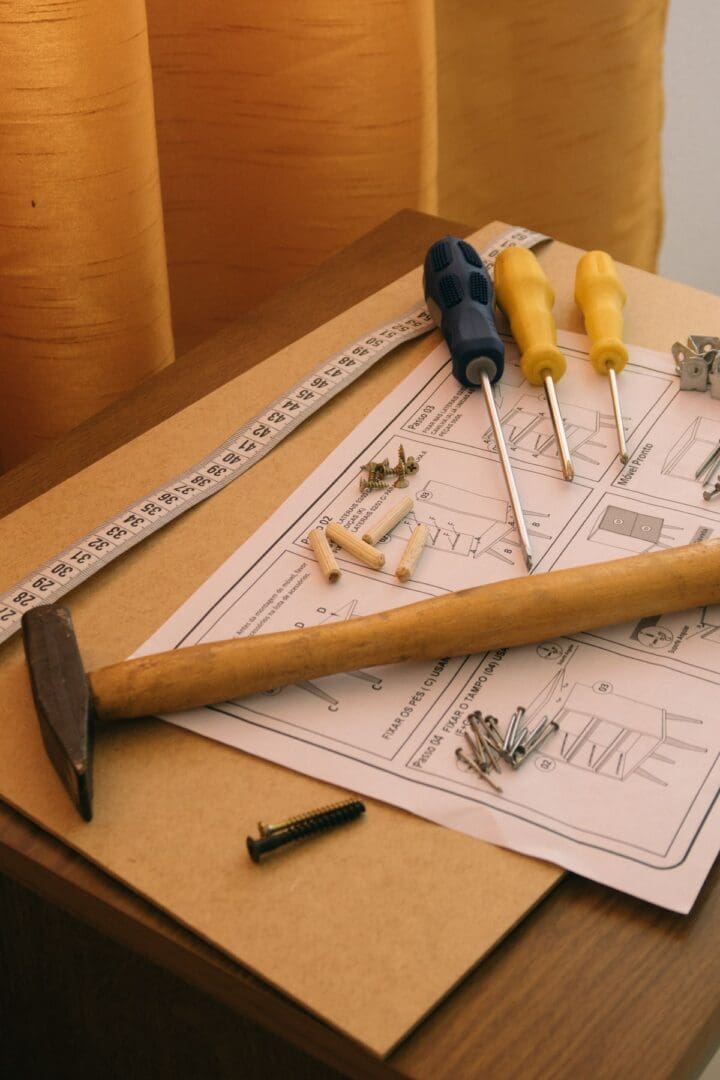
Build it yourself when the item is small, has a modest number of parts, and does not need to be perfectly square to work. Bedside tables, simple shelving, small drawer units, coffee tables, and most chairs fall into this group. These are forgiving: a slightly over-tightened screw or a minor wobble rarely ruins the result.
The honest test is three questions:
- Can one person lift and turn the heaviest panel without strain?
- Does the whole build look like one or two hours, not half a day?
- Will it sit on the floor without needing to be fixed to the wall?
If you answer yes to all three, the job is a good DIY candidate. A clear hour, a flat surface, and the right screwdriver will usually see it through.
There is also a learning benefit. The first few simple builds teach you how cam locks, dowels, and pre-drilled holes work, which makes you far quicker on the next one. For a run-through of the small habits that prevent most beginner mistakes, our guide to getting flat-pack furniture assembly right covers the basics worth knowing before you open the first box.
Which Items Are Worth Handing to a Pro?
Hand over anything heavy, multi-box, or unforgiving of small errors. Large wardrobes are the clearest example. A big multi-door wardrobe is one of the most time-consuming flat-pack items you can buy, and it can take several hours to build even for someone who does it regularly. Sliding-door and fitted models take longer still, because the doors only run smoothly if the frame is perfectly square.
Here is where a professional genuinely earns their fee.
Wardrobes and sliding-door units
These are tall, deep, and made from large panels that are awkward to hold upright alone. If the carcass goes together even slightly out of square, the doors catch or the sliding mechanism jams. Getting that alignment right while also supporting heavy panels is a two-person job that most households are not set up for.
Wall units and tall bookcases
Floor-to-ceiling units and wall-mounted shelving combine assembly with fixing into the wall. The build has to be accurate and the mounting has to be secure, which brings in anchoring (more on that below). A unit that looks fine but is poorly fixed is a hazard rather than a finished job.
Multi-box kitchen and office furniture
Modular systems that span several boxes, such as large desks, media walls, or storage runs, need to line up across units. One misread panel early on throws off everything that follows. These are the builds where an extra pair of experienced hands saves hours of backtracking.
Physical strain is the other factor people underestimate. Wrestling large panels at floor level means repeated bending, twisting, and lifting, which is a common way to tweak your back. If a job involves lifting heavy boards for an hour or more, that alone is a sensible reason to book help rather than risk an injury that outlasts the furniture.
What Tools and Prep Make Assembly Go Smoothly?
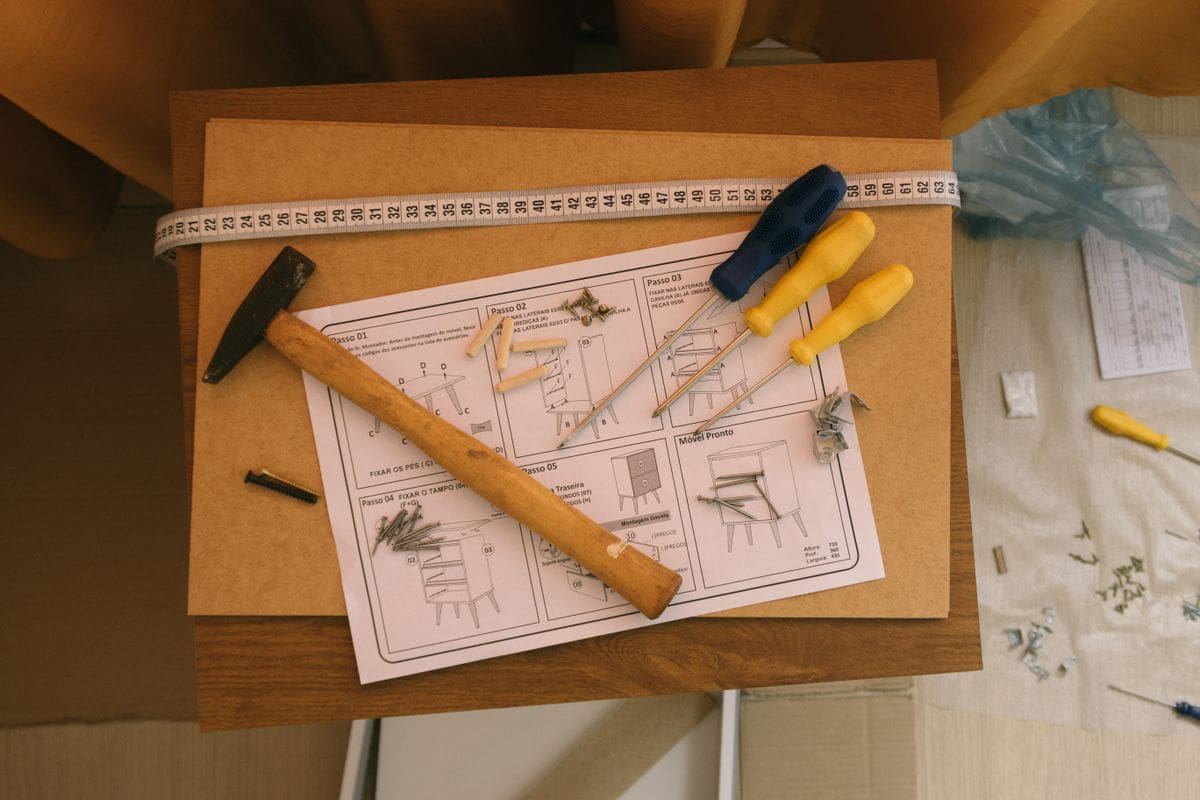
Good preparation removes most of the pain from a build before you turn a single screw. The jobs that go wrong are usually the ones started on a crowded floor with the wrong screwdriver and no plan. A short setup routine changes that.
Start with the space and the tools.
- Clear a flat, protected area larger than the finished item, so you can lay panels flat and walk around them.
- Put down a blanket or cardboard to stop panels and flooring scratching each other. This matters doubly on a parquet floor.
- Gather your tools first: a good Phillips and flat screwdriver, an Allen key set (even if one is supplied, a comfortable one is faster), a rubber mallet, and a tape measure.
- A cordless drill-driver with the clutch set low speeds up repetitive screws without stripping them, but keep the final turns manual to avoid over-tightening.
Then prepare the kit itself. Open every bag, sort the fixings into small piles or a bowl, and check them against the parts list before you begin. Finding a missing dowel at the start is annoying; finding it at step 15 is a lost evening.
Protecting flooring is not a small detail in Zurich apartments. Many have parquet or fine timber floors that scratch easily, and a dragged panel leaves a mark that outlasts the build. If your floor already needs attention, our parquet flooring care and installation guide explains how to keep timber floors in good shape. Lay down protection before, not after, the first panel goes down.
One more habit saves real time: read the whole instruction booklet through once before starting. You will spot the steps where a panel has to go in before it becomes unreachable, which is the single most common cause of a frustrating rebuild.
How Do You Safely Anchor Tall Furniture to the Wall?
Anchoring is the step that turns a tall unit from a hazard into a safe fixture, and it is the one most people skip. The U.S. Consumer Product Safety Commission reports that TV and furniture tip-overs are linked to roughly 17,800 injuries a year, and that a child is treated in an emergency department for a tip-over injury on average every 53 minutes (U.S. CPSC, 2024). Over the decade to July 2023, the agency recorded 217 tip-over fatalities. Anchoring is cheap, quick, and the single most effective way to prevent those incidents.
The principle is simple: a tall or top-heavy item should be fixed to the wall so it cannot pivot forward when a drawer is pulled out or a child climbs on it. Wardrobes, chests of drawers, bookcases, and tall shelving all qualify.
Doing it properly depends on the wall. This is where Swiss building fabric matters.
- Solid masonry or concrete walls, common in many Zurich apartments, need a masonry drill bit and the correct wall plugs or anchors rated for the load.
- Hollow or stud walls need fixings that locate the stud or spread the load behind the plasterboard; a standard plug alone will pull straight out.
- The bracket should fix into the furniture frame, not just a thin back panel, which can tear away under force.
Getting the wall type and fixing wrong is exactly how an anchor gives a false sense of security. If you are unsure what is behind your wall, that uncertainty is a fair reason to have the job done by someone who installs into Zurich walls regularly. The same anchoring judgement applies to anything heavy you fix up high, such as a television; our guide to mounting a TV on the wall safely covers the fixing choices in more detail.
How a Handyman Saves Your Weekend After a Move
A move is the moment professional assembly pays for itself most clearly, because the work arrives all at once. Beds, wardrobes, desks, shelving, and the children's room can each be a multi-hour build, and doing them back to back after a day of carrying boxes is how a free weekend disappears. A handyman can work through several rooms in a day while you deal with everything else a move demands.
The maths is straightforward. If three large items would take you a full Saturday and part of a Sunday, and you would rather not spend your first weekend in a new home on your hands and knees, the trade is time and comfort for a fee. For many people moving house, that trade is easy to justify.
There is a quality benefit too. Someone who assembles furniture daily does it faster, squarer, and with fewer leftover screws than a first-timer working from a booklet. They also arrive with the right tools, spare common fixings, and the experience to anchor tall items correctly in one visit.
Furniture assembly also pairs naturally with the other small jobs a move throws up: hanging curtains, mounting a television, fitting shelves, and fixing the inevitable loose handle. Rolling those into one visit is simpler than chasing separate tradespeople, and it is worth asking up front which jobs a handyman can cover so you book a single appointment rather than several.
What Should You Expect From a Professional Assembly Visit?
A good assembly visit is quick to arrange and leaves nothing for you to finish. The handyman confirms the items in advance so they bring the right tools and allow enough time, then builds each piece, anchors anything tall, and clears the packaging away. You are left with usable furniture and an empty, tidy room.
A few things make the visit smoother on your side:
- Keep the instruction booklets and all hardware bags together with each item.
- Have the furniture in or near its final position, since moving a finished wardrobe is harder than building it in place.
- Flag any wall anchoring up front so the right fixings come along for your wall type.
- Mention fragile flooring so panels are handled with protection from the start.
Clear packaging and waste removal is an underrated part of the service. A big flat-pack job generates a surprising volume of cardboard and plastic, and having it taken care of means you are not left with a hallway full of boxes on a weeknight.
This is the kind of work Homeexpert2u handles across the Zurich area: flat-pack assembly from any brand, wall anchoring to Swiss wall types, and the related mounting and fixing jobs that tend to come with it. The goal is a finished room in a single visit rather than a project that lingers.
DIY or Pro: A Quick Decision Checklist
Use a short checklist to decide in under a minute. The question is rarely about skill. It is about time, weight, and risk. Run through these points for the specific item in front of you, and the answer usually becomes obvious.
Lean toward doing it yourself when:
- The item is light enough for one person to handle comfortably
- The build looks like one to two hours at most
- It sits on the floor with no wall anchoring needed
- You own the basic tools and have a clear, protected space
Lean toward calling for help when:
- The item is a wardrobe, sliding-door unit, or tall bookcase
- It spans several boxes or needs panels to line up across units
- It must be anchored or mounted to the wall
- You are mid-move with several items waiting at once
- Heavy, repeated lifting would put strain on your back
When the two lists are close, the deciding factor is usually how you want to spend the hours. There is no prize for struggling through a build alone when a short visit removes the whole task. Trusting your own judgement here is the point of the exercise.
Common Assembly Mistakes Worth Avoiding
Most assembly problems trace back to a handful of avoidable mistakes, and knowing them in advance saves the most frustrating rebuilds. These are the ones that turn a tidy afternoon into a late night.
- Skipping the read-through. Starting without reading the booklet is the top cause of trapping a panel you still needed to reach.
- Over-tightening screws. Driving cam bolts or chipboard screws too hard strips the hole and loosens the joint permanently. Firm by hand is enough.
- Building on carpet or an uneven floor. A soft or sloping surface makes everything sit slightly out of true, which shows up badly in doors and drawers.
- Ignoring the wall anchor. Leaving the supplied anti-tip bracket in the bag is common and, given the tip-over figures above, genuinely risky.
- Losing the small bags. Tipping all the fixings into one pile makes near-identical screws impossible to tell apart halfway through.
If a joint already feels loose or a handle has worked itself free on existing furniture, that is a separate small fix worth doing properly rather than ignoring. A quick re-tighten with the right screwdriver keeps furniture and fittings solid and stops a minor wobble becoming a broken joint.
Ready to Skip the Allen Key? Book Furniture Assembly
The simplest way to know whether a job is worth doing yourself is to picture the finished item and the hours in between. If the picture is a quiet hour and a small table, enjoy it. If it is a wardrobe, a wall of shelving, or a weekend lost to a house move, that is the point to pass it on.
Homeexpert2u offers furniture assembly across the Zurich area, from single flat-pack items to full rooms after a move, with proper wall anchoring for tall pieces and tidy packaging removal when the job is done. If you have a build waiting, get in touch to arrange a visit and have it finished in one appointment, with your weekend left intact.
Frequently asked questions
How much does furniture assembly in Zurich usually cost?
Most Zurich handymen charge an hourly rate, so cost depends on the item. A simple bedside table takes minutes, while a large wardrobe or wall unit can run a few hours. Ask for an estimate based on the specific pieces before booking.
Can a handyman assemble furniture I bought from IKEA or another store?
Yes. A good handyman assembles flat-pack furniture from any brand, including IKEA, Pfister, Micasa and online retailers. Keep the instructions and all hardware bags, and let them know the item size so they bring the right tools.
Do you anchor furniture to the wall as part of assembly?
Reputable assembly services anchor tall items like wardrobes and bookcases to the wall. This is the single most important safety step, especially in homes with children, and it suits most Zurich wall types when done with the correct fixings.
How long does it take to assemble a wardrobe?
A large multi-door wardrobe is one of the most time-consuming flat-pack items and can take several hours, even for an experienced builder. Sliding-door models and fitted units take longer still because alignment has to be precise.