
How to Hang Holiday Lights and Decorations Safely
Key takeaways
- Use only lights and fixings rated for outdoor use, and check every strand for cracked insulation before it goes up.
- Falls make up about 41% of holiday decorating injuries, so set your ladder on firm ground and keep three points of contact.
- Protect outdoor power with a residual current device (RCD/FI switch), and keep every connector up off the ground and out of standing water.
- Mount lights with clips and hooks designed for the job, never nails or staples, to avoid damaging walls, gutters and facades.
- Take decorations down before mid-January, when dried-out greenery and tired fixings cause a spike in problems.
The safest way to hang holiday lights is to use outdoor-rated strings, work from a stable ladder on firm ground, and protect every outdoor socket with a residual current device. Most holiday decorating injuries come from falls and from moisture reaching electrics that were never meant to go outside, and both are easy to prevent with a little planning.
This guide walks through how to hang holiday lights safely from start to finish: choosing the right gear, using a ladder without taking a tumble, fixing lights to walls and facades without leaving damage, keeping outdoor power dry, and packing everything away cleanly in January. The advice applies whether you are decorating a single balcony in a Zurich flat or wrapping an entire house in lights.
Each winter brings a predictable rise in avoidable accidents. In the United States, roughly 18,000 people a year end up in emergency rooms because of Christmas decorating incidents, according to figures the Consumer Product Safety Commission collects (USAFacts, 2013-2022 data). The same patterns show up here: ladders, wet connectors and tired old light strings. A careful afternoon of work keeps your home festive and fault-free.
Why Does Holiday Decorating Cause So Many Injuries?
Holiday decorating lands thousands of people in hospital every year, and the single biggest cause is falls. The Consumer Product Safety Commission found that falls account for about 41% of holiday decorating injuries, with lacerations and back strains close behind (CPSC, 2017). Most of these happen at height, on ladders, in a hurry.
The reason is simple. Decorating pushes people into unfamiliar tasks: climbing higher than usual, reaching sideways, handling electrics in the cold with gloves on. Add a short winter afternoon and the pressure to finish before dark, and small risks stack up fast.
There is a clear peak, too. The Sunday after the American Thanksgiving holiday sees an average of 660 people seek medical attention for decorating injuries in a single day (USAFacts, 2013-2022 data). The lesson travels well: the first big decorating push of the season is when rushing does the most harm.
Knowing where the danger sits helps you plan. The rest of this guide tackles each risk in turn, starting with the gear you buy before you climb anything at all.
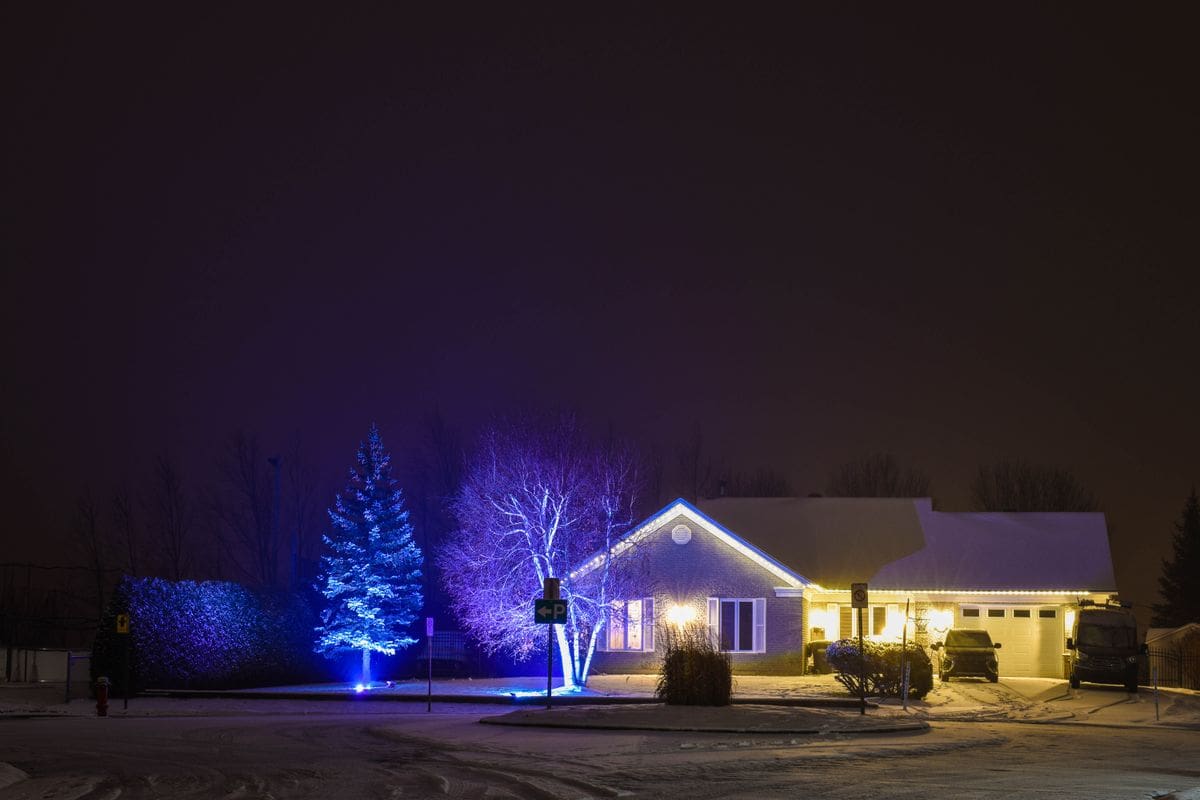
How Do I Choose the Right Gear to Hang Holiday Lights Safely?
Start with the label. Lights and extension leads for outdoor use carry an IP rating, and anything going outside should be at least IP44, which means it is protected against splashing water from any direction. Indoor-only strings have no such protection, and rain or melting snow in a connector is a common cause of shorts and fires.
Switzerland uses the European marking system, so look for the CE mark and clear outdoor or IP44 labelling on the box and the cable. If a product only shows an indoor symbol or carries no rating at all, keep it inside.
A few quick checks before anything goes up:
- Pick LED over old filament bulbs. LEDs run cool, draw far less power, and reduce both fire risk and your electricity bill.
- Inspect every strand. Flex the cable along its length and look for cracked insulation, browning near bulbs, or bent pins. Bin anything damaged rather than repairing it.
- Check the connectors. Outdoor plugs and joins should click together firmly and sit in a sealed housing, not a loose push-fit.
- Match fixings to the surface. Buy clips made for gutters, roof tiles, railings or brick, rather than improvising with tape or wire.
- Read the run limit. Each box states how many strings you can safely link end to end. Going over that limit overloads the first cable in the chain.
Quality matters more outdoors than in. Sun, frost and damp age cheap cable quickly, and a strand that looked fine last December may have gone brittle in storage. If you are unsure whether an older set is still safe, replacing it costs far less than dealing with a fault. For a wider view of electrical housekeeping, our guide to home electrical safety checks every owner should do covers the basics worth running through each season.
How Do I Use a Ladder Safely When Decorating High Up?
Set the ladder on firm, level ground and keep three points of contact at all times, meaning two feet and a hand, or two hands and a foot. Since falls cause roughly four in ten holiday decorating injuries, the ladder is where most of your attention should go. A few minutes spent setting it up properly prevents the accident that spoils the whole season.
Ground conditions decide a lot in a Zurich winter. Frosted grass, a dusting of snow or a slick of ice under the feet of a ladder turns a stable base into a skating rink. Clear and grit the spot first, and lay a board under the feet if the ground is soft.
For a leaning ladder, use the one-in-four rule: the base sits one metre out from the wall for every four metres of height. Too steep and it can tip backwards; too shallow and the feet can slide out.
Work through this before you climb:
- Tell someone you are going up, or better, have a person foot the ladder on tall runs.
- Keep your hips between the rails. Do not lean out to reach that last clip. Climb down and move the ladder instead.
- Carry lights in a bag or on a hook, so both hands are free for climbing.
- Avoid the top two rungs of a step ladder, and never stand on the very top cap.
- Stop in wind or rain. Gusts catch loose strings and throw you off balance.
Rushing is the real enemy. The job that tempts you to stretch "just once more" is exactly the one that ends badly. If a part of the roofline is genuinely out of safe reach, that is the point to bring in help rather than improvise. The same caution applies to any work at height around the house, from clearing gutters to reaching awkward corners of the facade.
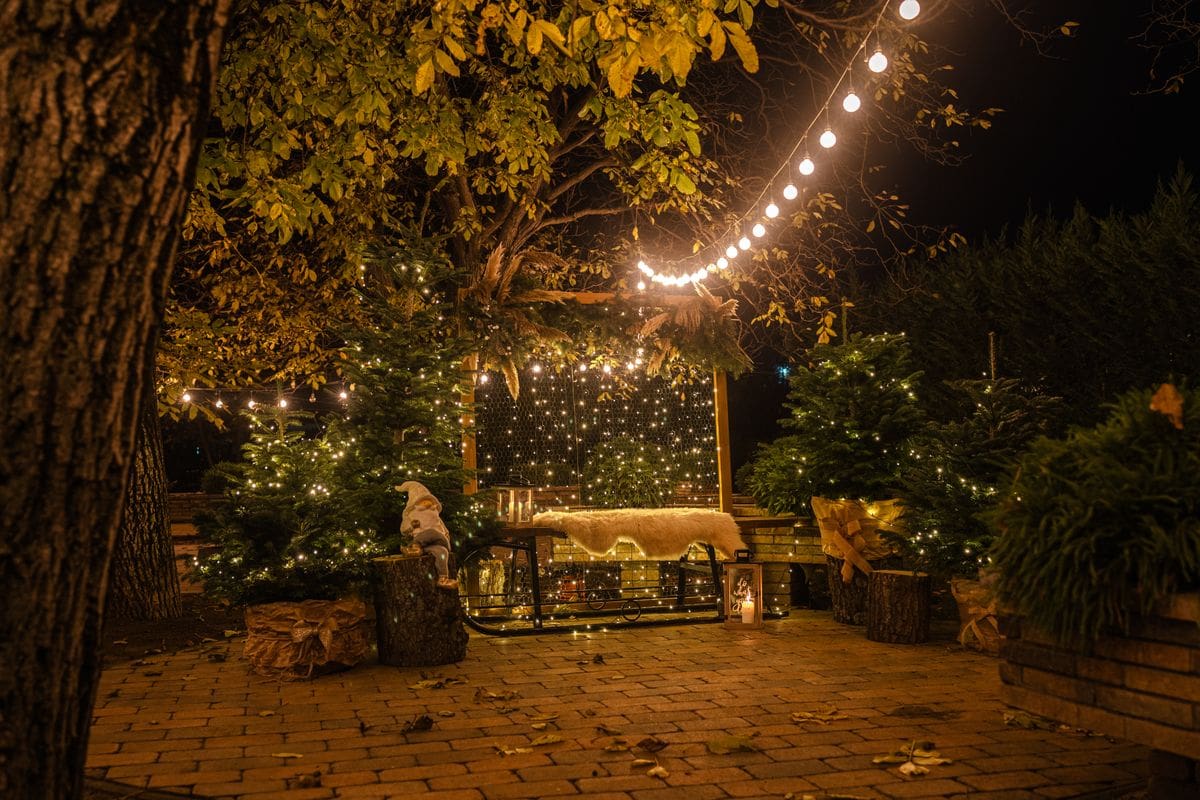
How Can I Mount Lights Without Damaging Walls or Facades?
Use fixings designed to grip a surface without piercing it: plastic clips for gutters and tiles, adhesive hooks for rendered walls, and cable ties or hooks for railings. Nails, screws and staples all break the surface, let water in behind render or paint, and leave holes you will be filling next spring.
Swiss apartment blocks and houses often have rendered or plastered facades, and these are easy to crack. A nail driven into render can spread a hairline fracture that lets moisture seep in, and in winter that moisture freezes and widens the gap. The fix is to avoid penetrating the surface in the first place.
Different surfaces call for different fixings:
- Gutters and eaves: all-in-one gutter clips hook over the edge and hold a bulb or cable without tools.
- Roof tiles and shingles: shingle tabs slide under a tile edge, no nails needed.
- Rendered or painted walls: exterior-grade adhesive hooks, applied to a clean, dry surface, peel away cleanly later.
- Brick and masonry: brick clips grip the mortar line without drilling.
- Railings, balconies and frames: reusable cable hooks or soft ties wrap around without marking the metal or wood.
Renters have an extra reason to be careful. Visible damage to a facade or balcony can come out of a deposit, and Swiss tenancy agreements tend to be strict about alterations. Reversible, no-trace fixings keep you on the right side of the contract. Landlords and property managers running several units know the same logic well, since avoidable surface damage across a portfolio quickly becomes a costly, recurring theme.
Plan the run before you fix anything. Lay the lights out on the ground, work out where each clip goes, and you will avoid the classic mistake of running out of cable halfway along the roofline and stretching a strand tight across a corner.
How Do I Manage Cables and Power Outdoors Safely?
Protect every outdoor circuit with a residual current device, known in Switzerland as an FI switch (Fehlerstrom-Schutzschalter), which cuts the power in milliseconds if current leaks to earth. This single device is the most important safeguard you have when mixing electricity with winter weather. If your outdoor socket is not already protected, a plug-in RCD adaptor adds that protection cheaply.
Water is the enemy. Keep every connector and join up off the ground, never lying in a puddle, on wet grass or where snow can bury it. Where two cables meet outdoors, lift the join onto a hook or tuck it into a weatherproof connector box so meltwater drains away rather than pooling in the plug.
Keep these habits for every outdoor run:
- Use outdoor-rated extension leads, not an indoor lead fed through a window gap that crushes the cable and lets cold air in.
- Do not overload a socket. Add up the wattage of everything plugged in and stay well under the socket's limit. LED strings make this easy.
- Route cables out of walkways. A lead across a path is a trip hazard and gets damaged underfoot. Run it along the edge and clip it down.
- Leave a drip loop at each connection, a small downward bend in the cable so water runs off before reaching the plug.
- Switch off at the socket before handling any connection, and use a timer so lights are not left running unattended overnight.
Decoration fires are not rare. In the United States, an average of 790 home fires a year start with decorations other than the Christmas tree, causing one death, 26 injuries and 13 million dollars in property damage annually (NFPA, averaged data). Many trace back to electrical faults that proper outdoor gear and an RCD would have stopped. A working smoke alarm is your backstop here, so test yours before the decorating season starts.
Anything beyond plugging into an existing protected socket belongs to a professional. In Switzerland, new fixed wiring or a new outdoor socket must be installed by a registered electrician. This is a legal and safety boundary, not a suggestion.
What About Indoor Decorations, Trees and Candles?
Indoor decorating carries its own risks, and the Christmas tree is the headline one. The National Fire Protection Association records an average of 160 home fires a year that begin with a Christmas tree, and more than two in five of those involve electrical distribution or lighting equipment (NFPA, 2016-2020 data). A dry tree near a heat source is a serious hazard.
Keep a real tree watered daily and well away from radiators, fireplaces and underfloor-heating vents. A tree that drops needles when you touch a branch has dried out and should go. Position it so it does not block a doorway or exit route.
Lights and candles need the same discipline indoors as out:
- Switch tree lights off at night and whenever you leave the flat. A timer handles this without thought.
- Never run cables under rugs, where heat builds up and damage goes unseen.
- Keep candles away from greenery, curtains and anything that can catch, and never leave a flame unattended.
- Do not overload the socket behind the tree, which often ends up carrying lights, a star and an extension strip all at once.
Timing matters more than people expect. Nearly a third of Christmas tree fires happen in January, once the tree has dried out but is still standing and still lit (NFPA, 2016-2020 data). Taking the tree down promptly removes the risk entirely.
How Do I Light a Balcony or Small Zurich Flat Safely?
For a balcony or small flat, stick to low-voltage LED strings, fix them to the railing with reusable hooks, and run a single outdoor-rated lead back to one protected socket. Space is tight and surfaces are often shared or restricted, so the goal is a festive effect with the lightest possible footprint on the building.
Many Zurich flats come with house rules (Hausordnung) that limit what you can attach to balconies, facades and common areas. Check yours before you start. Battery-powered or solar LED strings sidestep the socket question entirely and are ideal where an outdoor power point is missing.
A few balcony-specific pointers:
- Weight the base of any standing decoration, so winter gusts funnelling between buildings cannot tip it onto the street below.
- Keep nothing overhanging the railing where it could fall on a passer-by.
- Favour warm, low-glare lights out of courtesy to neighbours across the courtyard.
- Use timers so lights go off late evening, in keeping with local quiet-hours expectations.
Small spaces reward restraint. A single neat strand along the railing looks better and causes fewer headaches than an overloaded display. Treat decorating as one line on a wider winter checklist, folded in alongside the other jobs the cold Zurich months bring.
When Should I Call a Professional Instead of DIY?
Call a professional when the work involves fixed wiring, heights you cannot reach safely, or a roofline that needs more than a short step ladder. Plugging LED strings into an existing protected socket is a reasonable homeowner job. Anything touching the building's wiring, or anything that puts you on a tall ladder near the edge of a roof, is not.
Use this quick test. If a task makes you hesitate about your own safety, that hesitation is the answer. The cost of help is always lower than the cost of a fall or a fire.
Situations worth handing over:
- Steep or high rooflines where a ladder cannot be placed on stable, level ground.
- New sockets or any hard-wired display, which Swiss regulations reserve for a registered electrician.
- Large displays that draw real power and need load calculations done properly.
- Older buildings with fragile render, listed facades or shared structures where damage carries consequences.
This is where a local handyman earns their keep. Home Expert 2 U works on homes and businesses across the Zurich area and knows local building standards and facade types, so lights go up securely and come down without a trace. Bringing in steady, insured help for the high or awkward parts lets you enjoy the result rather than worry about the ladder. Choosing the right person matters, and our guide on how to choose a reliable handyman you can trust covers what to look for.
How Do I Take Decorations Down Without Leaving Marks?
Take decorations down gently in the first half of January, peeling adhesive fixings slowly and warming them first if they resist, so they release without pulling off paint or render. The same care that got the lights up cleanly gets them down cleanly. Rushing the removal is how walls end up scarred after a tidy installation.
Cold makes adhesives brittle and stubborn. Warm an exterior hook with a hairdryer on a low setting, or simply wait for a milder, dry morning, and it will peel rather than tear. Pull slowly and parallel to the surface, not straight out, to spread the force.
Work through removal in order:
- Switch off and unplug everything at the socket before you touch a single clip.
- Peel adhesive hooks slowly, warming any that resist, and lift clips off gutters by hand rather than yanking the cable.
- Coil lights loosely around a reel or a piece of card, not in tight knots that stress the wiring.
- Label each coil so next year you know which strand goes where and avoid guesswork on the ladder.
- Store in a dry, sealed box away from damp, mice and crushing, which is what ages cable fastest in a cellar.
A dab of leftover adhesive usually rubs off with a little warm soapy water or a plastic scraper, never a metal blade that gouges render. If a fixing has marked the surface despite your care, a small patch and touch-up sorts it with a little filler, fine sandpaper and matching paint. Packed away properly, this year's lights are ready to go straight back up next winter, safely and without a shopping trip.
Keep the Season Bright and the Risks Low
The one job worth doing before you climb anything is a five-minute kit check: spread out every light string, flex the cables, confirm the outdoor rating, and set aside anything cracked or questionable. That single habit removes most of the fire and shock risk before it ever reaches your wall, and it costs nothing but a moment of attention.
If the display you have in mind involves a high roofline, new wiring, or a facade you would rather not risk, get in touch with Home Expert 2 U. A quick visit means the lights go up safely, the building stays unmarked, and January tidy-up is painless. Enjoy the glow, and let someone else hold the ladder.
Frequently asked questions
Can I use my indoor fairy lights outside if I only leave them up for a few weeks?
No. Indoor-only strings are not sealed against rain, snow or frost, and moisture in the connectors can cause a short or a fire. Always use lights marked for outdoor use, ideally IP44 or higher.
Do I need an electrician to put up outdoor holiday lights in Switzerland?
Plugging low-voltage LED strings into an existing outdoor socket is usually fine for a homeowner. Any new fixed wiring, a new outdoor socket or anything hard-wired must be done by a registered Swiss electrician.
What is the safest way to attach lights to a rendered or plastered facade?
Use adhesive clips or hooks rated for exterior use rather than nails or screws. On delicate render, run lights along railings, window frames or gutters using purpose-made clips to avoid cracking the surface.
When should I take my holiday lights down?
Aim for the first half of January. Dried greenery, UV-worn cables and loosened fixings all become more hazardous the longer decorations stay up, and winter weather in Zurich is hard on outdoor materials.